Blogs
Blogs
Practical, plain-English reads on GenAI, software, and getting real business results. Newest first.
Freshly written
Published in the last week
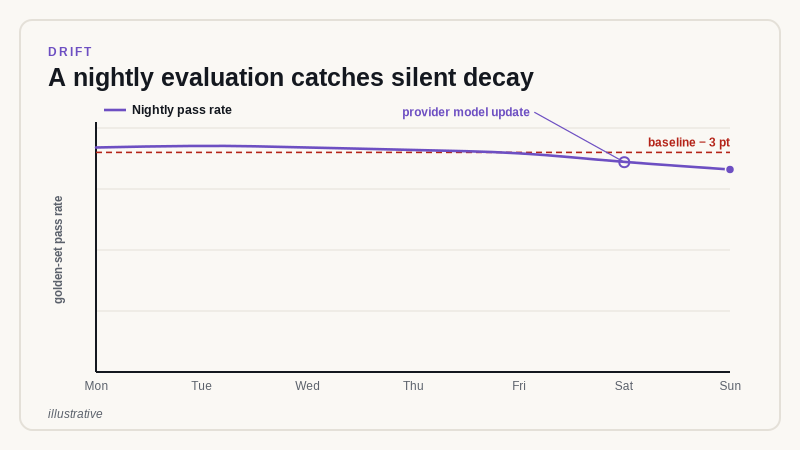
Operating GenAI in Production: Observability, Drift, and Incident Response
What to monitor, how to detect quality drift, and how to run incidents for non-deterministic systems.
Read →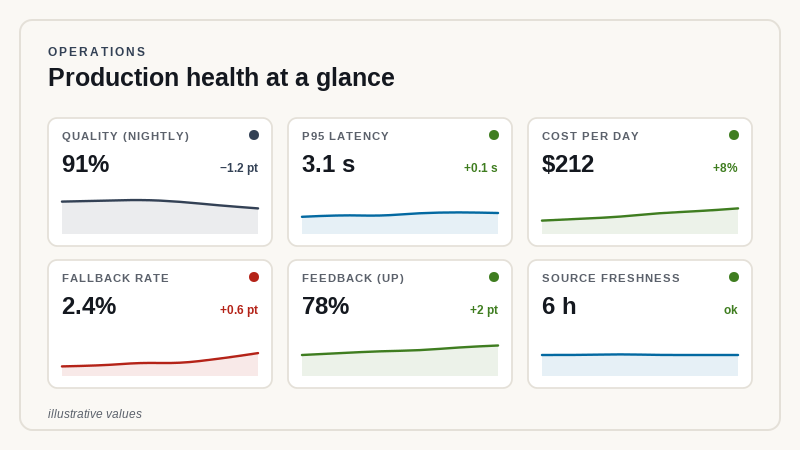
After Launch: Keeping a GenAI System Healthy
Launch is the start. Systems need watching, because data, models, and needs change.
Read →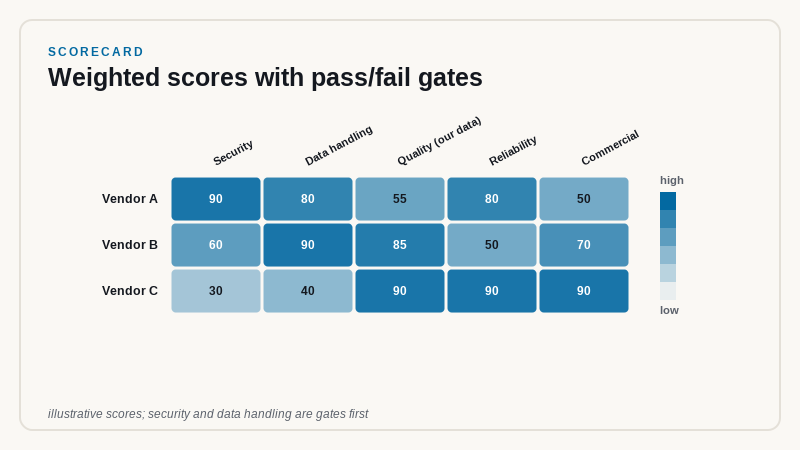
Technical Due Diligence for AI Vendors
A structured way to evaluate vendors: security, data handling, quality on your cases, reliability, and exit.
Read →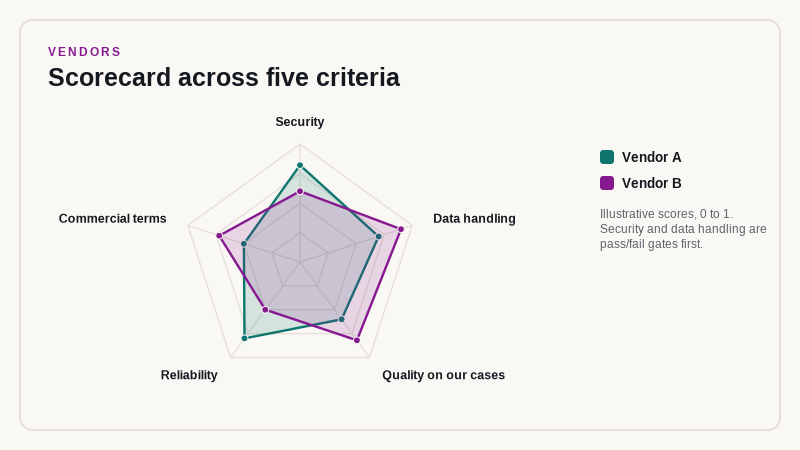
How to Evaluate AI Vendors: Questions to Ask
Every vendor promises results. These questions help you tell the difference.
Read →Earlier posts
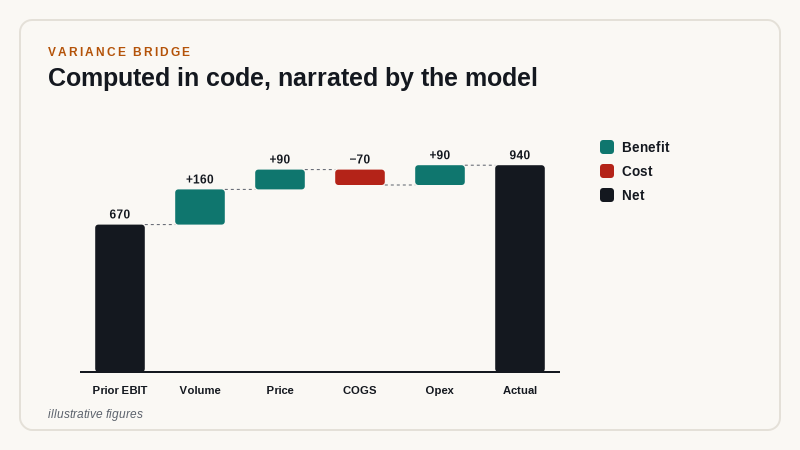
GenAI for Finance: Numbers-First Reporting and Controls
A design where the data layer computes the figures and the model only explains them, with reconciliation and audit.
Read →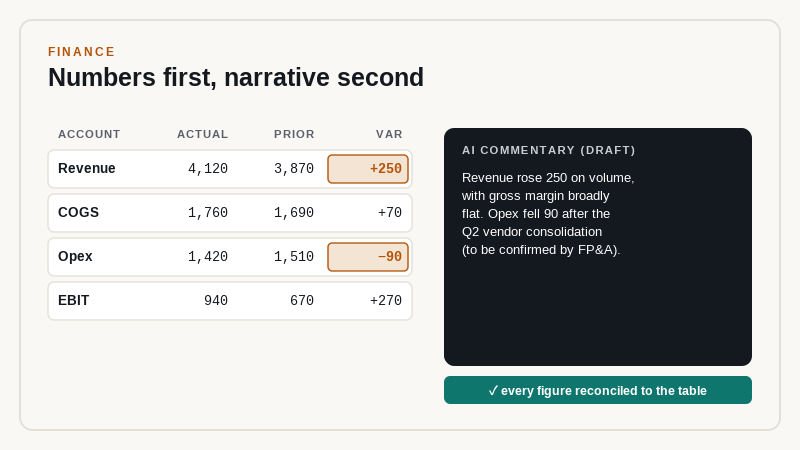
GenAI for Finance Teams: Reports and Variance Explanations
Finance spends days explaining the numbers. GenAI can draft the story while analysts check the facts.
Read →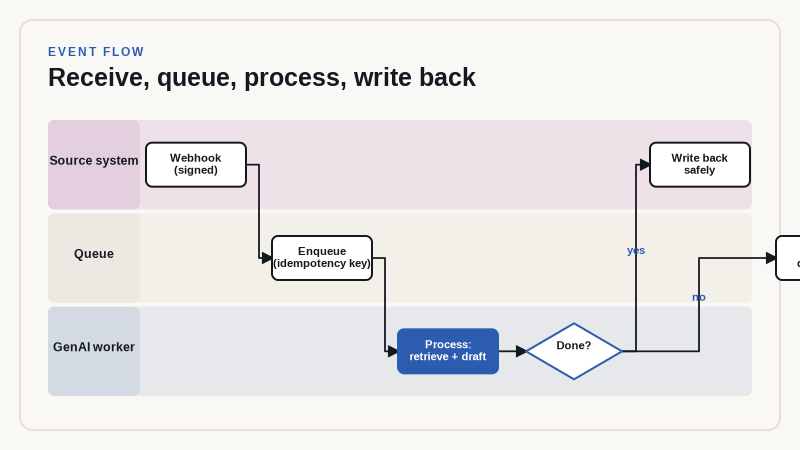
Integration Patterns for GenAI: APIs, Webhooks, and Queues
How to connect GenAI to business systems reliably: event-driven design, idempotency, rate limits, and failure handling.
Read →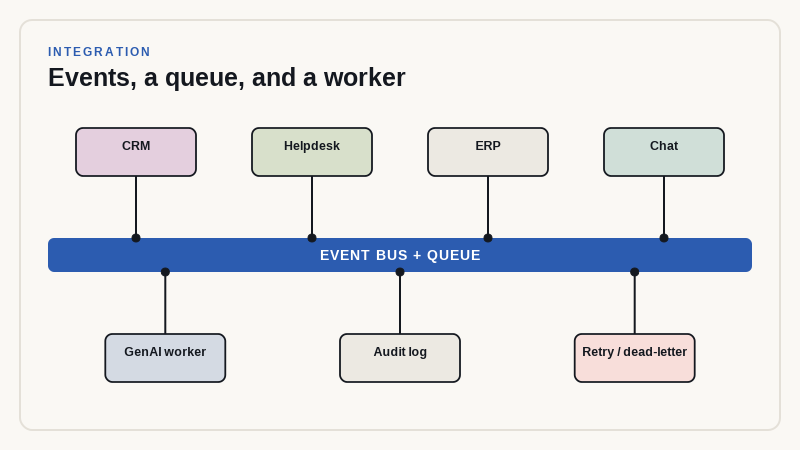
Connecting GenAI to the Tools You Already Use
The best AI shows up inside your existing workflow, not in another tab.
Read →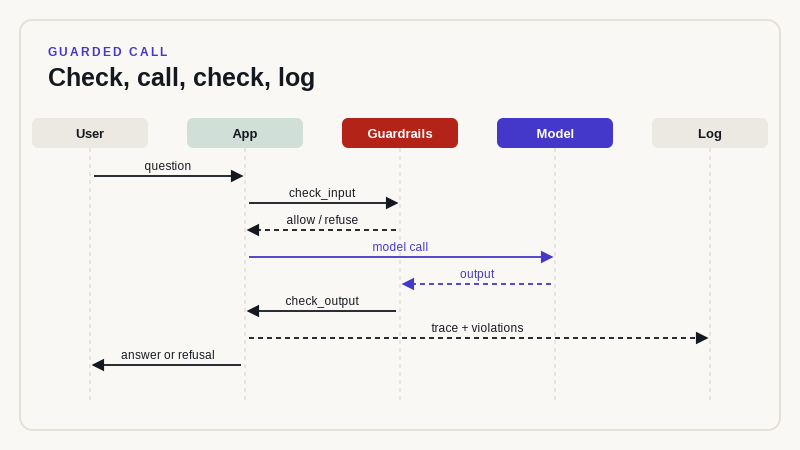
Implementing GenAI Guardrails: Input and Output Checks in Code
A layered guardrail design with policy as configuration, tested like any other code.
Read →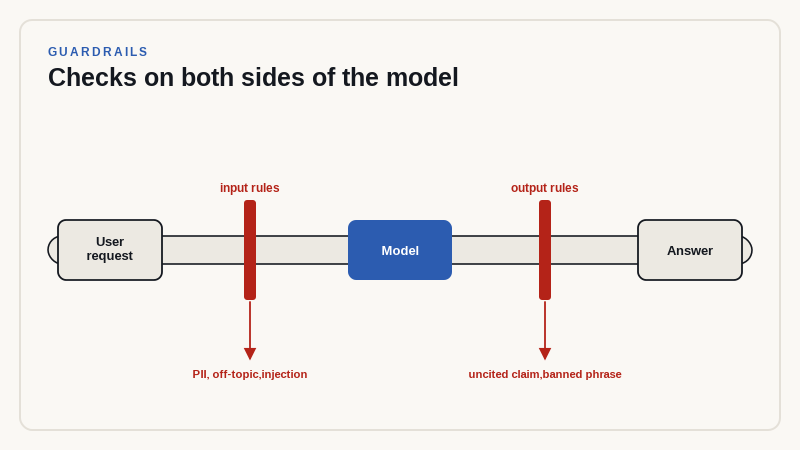
Guardrails: Setting Safe Limits for AI
Guardrails are the rules that keep AI useful and safe. They are easier to build than they sound.
Read →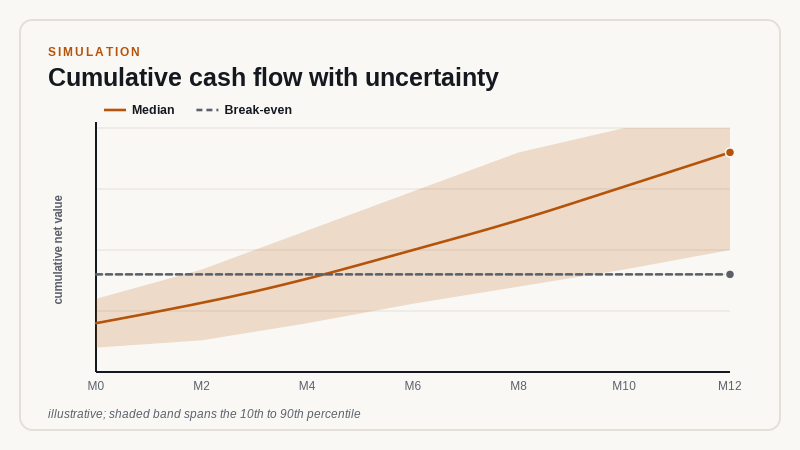
A GenAI ROI Model: NPV, Payback, and Uncertainty
Go beyond a single ROI number: model benefits and costs over time, with ranges, and see how likely the project is to pay back.
Read →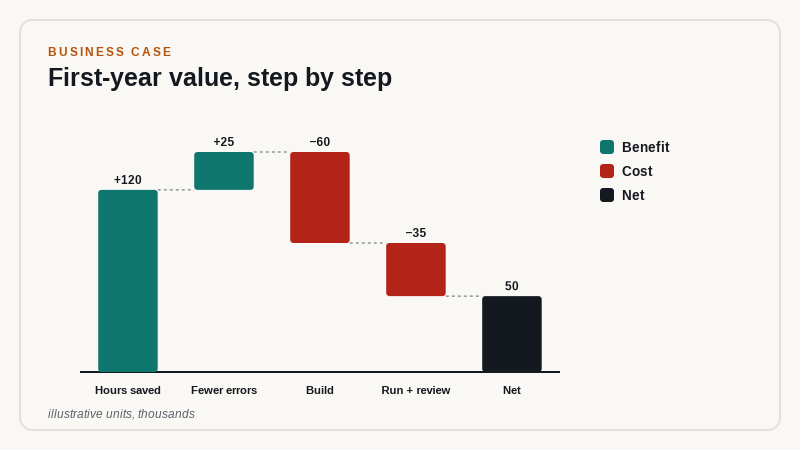
Calculating ROI on a GenAI Project
A simple way to estimate whether a project is worth doing, before you build it.
Read →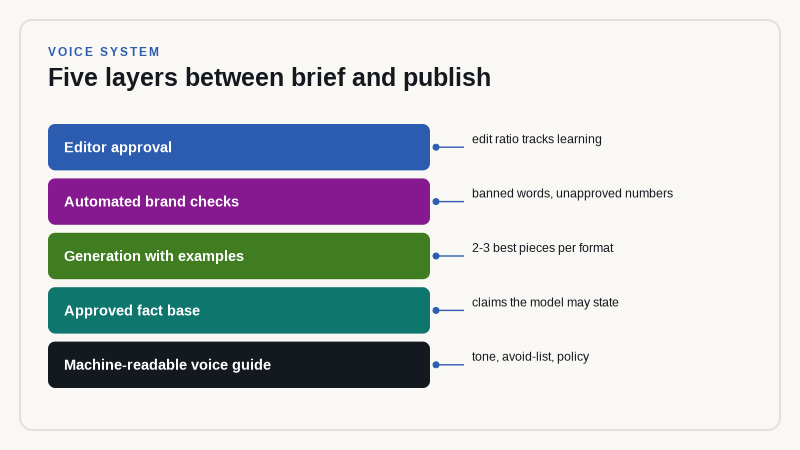
Building a Brand Voice System for GenAI Content
How to encode your voice, facts, and approvals so generated content stays on brand and accurate.
Read →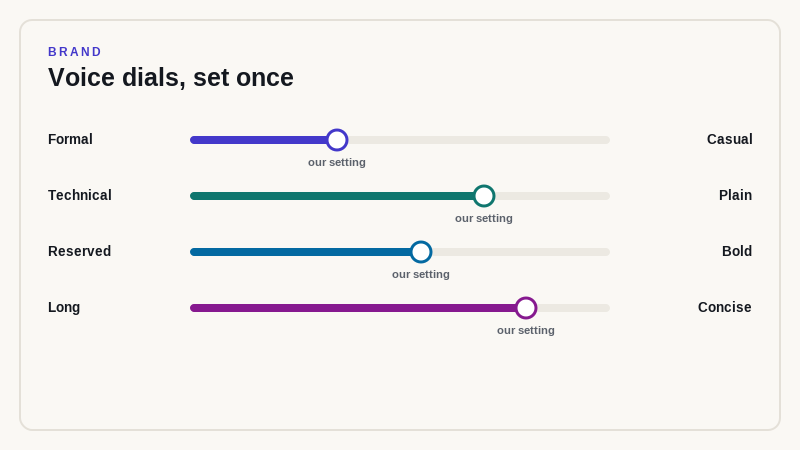
AI in Marketing: Content That Still Sounds Like You
AI can write fast. The challenge is keeping your voice and your facts.
Read →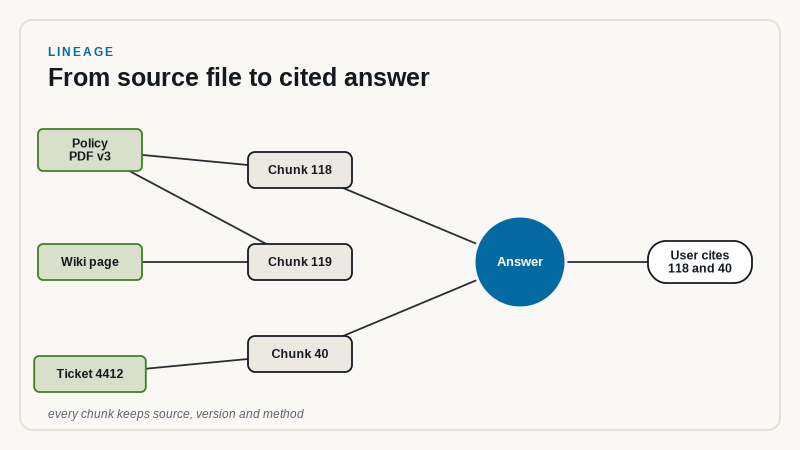
A Data Readiness Pipeline for GenAI: Ingestion, Quality, and Lineage
Turn scattered documents and tables into a reliable, permissioned, up-to-date source for GenAI.
Read →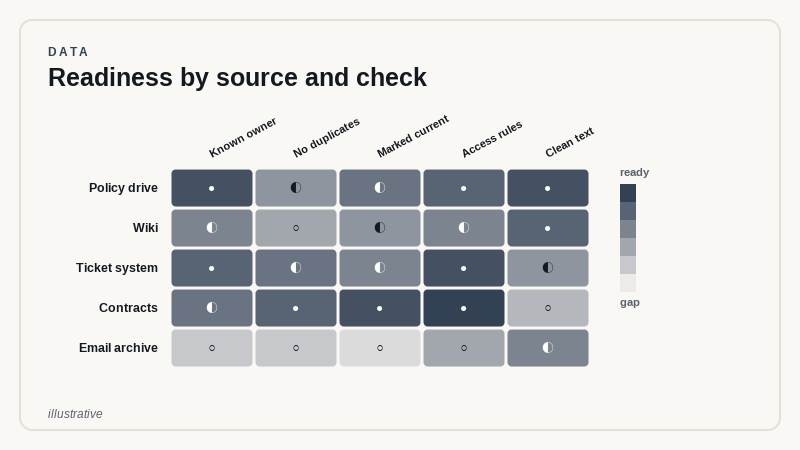
Getting Your Data Ready for AI: A Simple Checklist
Messy data is the most common reason AI projects disappoint. A short checklist helps.
Read →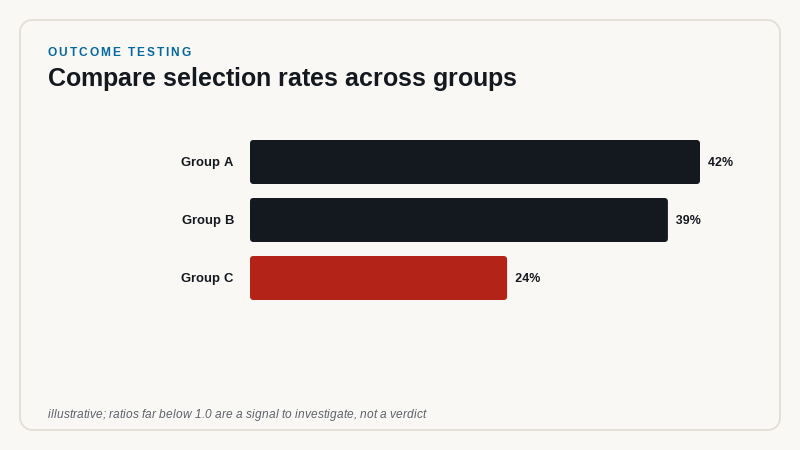
Responsible GenAI in HR: Data Minimization and Bias Testing
Engineering controls for HR use cases: what data to exclude, how to test for disparate outcomes, and how to keep humans accountable.
Read →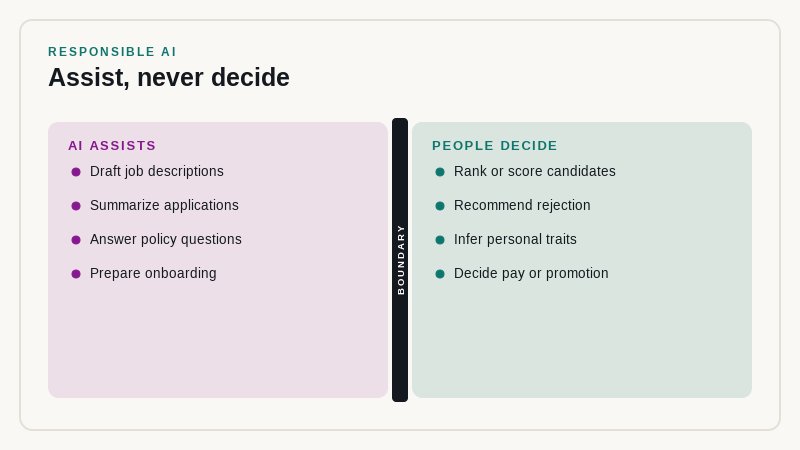
GenAI for HR and Recruiting: Where It Helps and Where to Be Careful
AI can save recruiters hours, but hiring decisions carry real risk. Here is a safe split.
Read →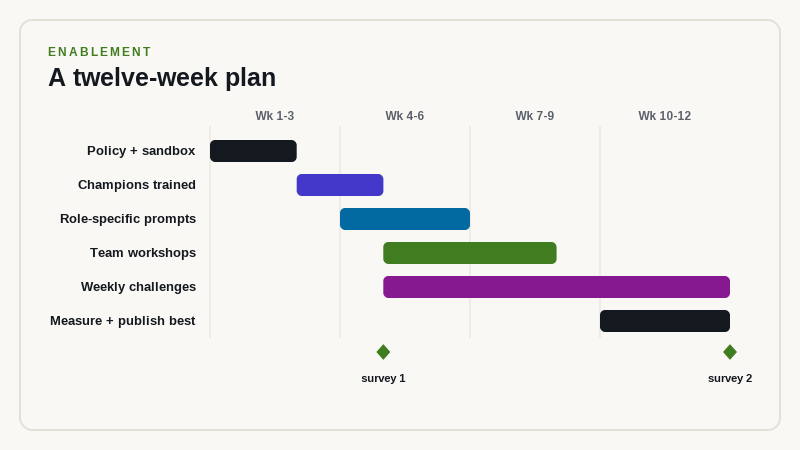
Engineering an AI Enablement Program: Sandbox, Prompt Library, and Analytics
The tooling behind successful adoption: a safe sandbox, a shared prompt library, and usage analytics that guide training.
Read →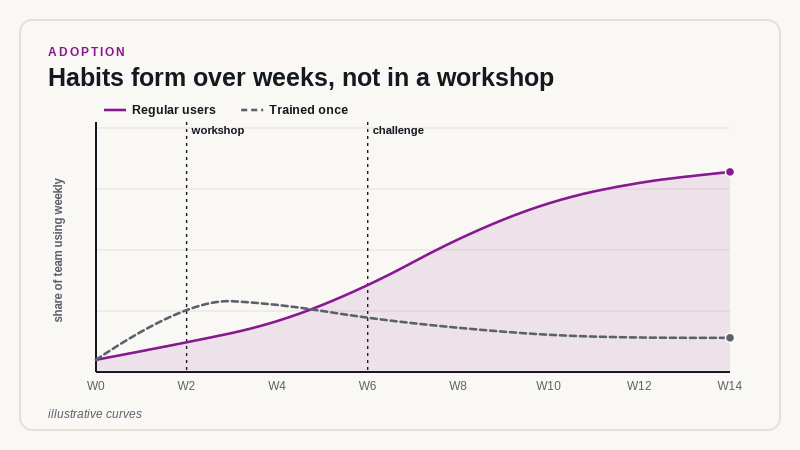
Training Your Team to Work With AI
The best tool fails if nobody uses it. Adoption is mostly about people.
Read →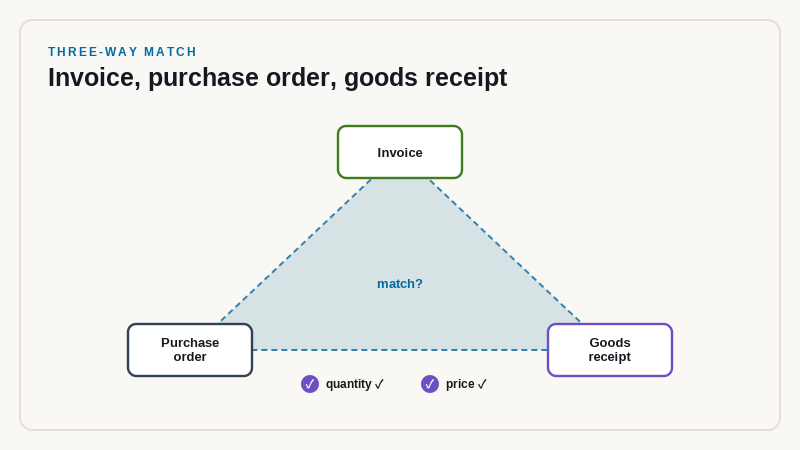
Document Extraction Pipelines for Invoices and Forms
OCR, layout, structured extraction, validation rules, and human exception handling for back-office documents.
Read →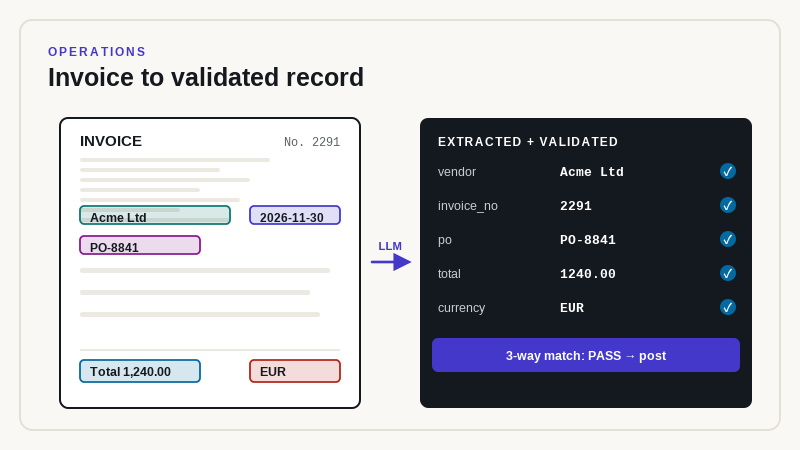
Automating Invoices and Back-Office Paperwork With GenAI
Paperwork is slow, repetitive, and full of small errors. It is a strong match for AI.
Read →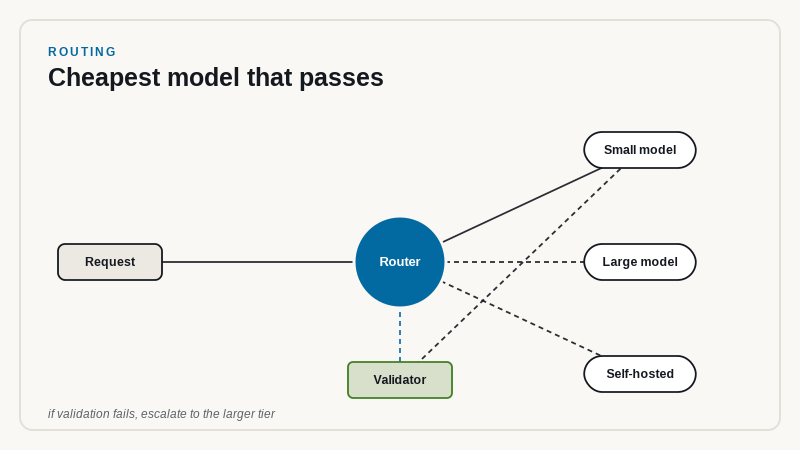
LLM Selection: Benchmarking, Routing, and Fallbacks
How to choose models with your own benchmark, then route requests across them for cost and reliability.
Read →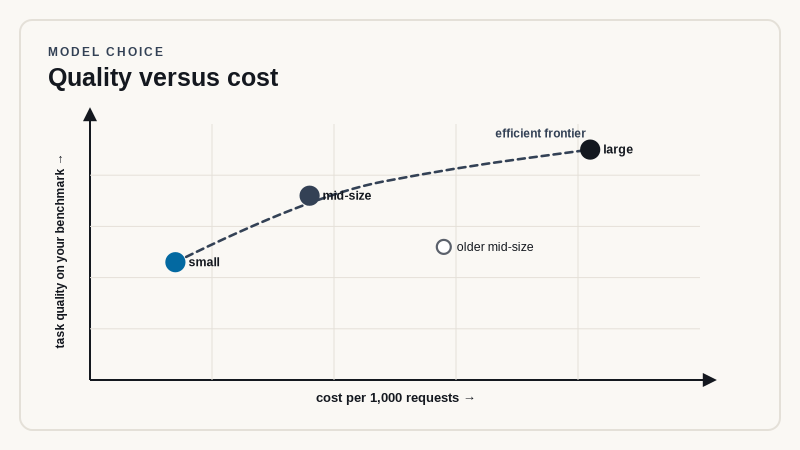
Choosing an AI Model: Bigger Is Not Always Better
The largest model is rarely the right default. Here is how to match the model to the job.
Read →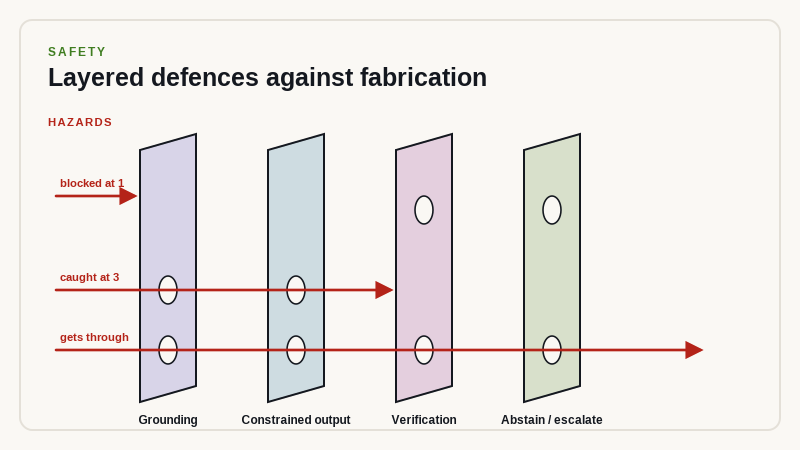
Reducing LLM Hallucinations: Engineering Techniques That Work
Grounding, constrained output, verification, and abstention: a toolkit with code for making outputs dependable.
Read →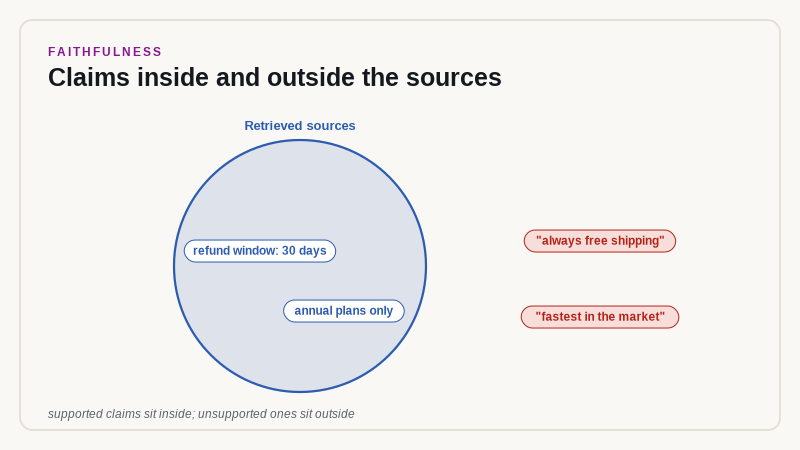
Why AI Makes Things Up, and How to Reduce It
Hallucinations are the most common worry about GenAI. They can be managed, once you know why they happen.
Read →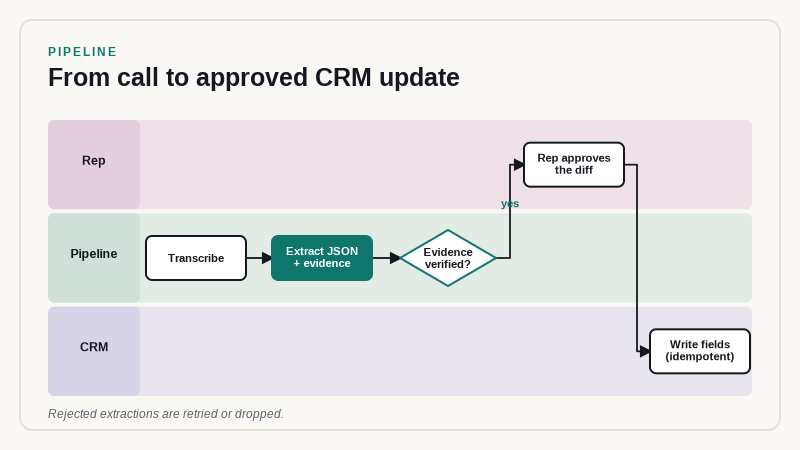
GenAI for Sales: Transcript Pipelines and CRM Integration
How to turn call recordings into structured CRM updates and follow-up drafts, reliably and securely.
Read →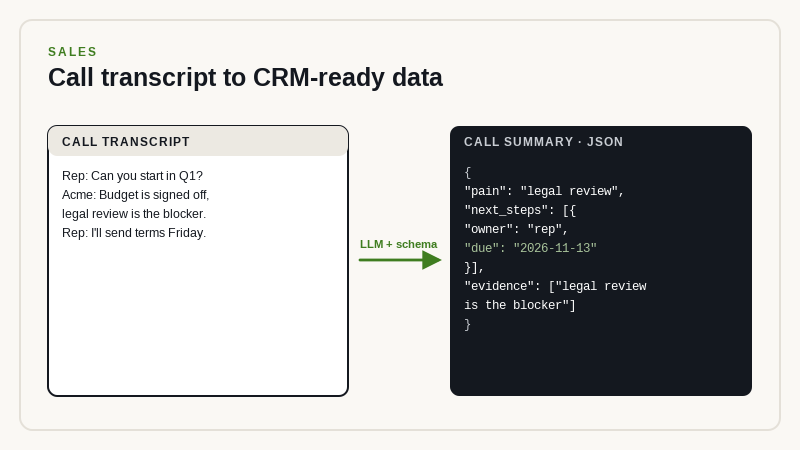
GenAI for Sales Teams: Faster Follow-Ups and Better Call Prep
Sales reps spend hours on notes and emails. Here is where GenAI gives that time back.
Read →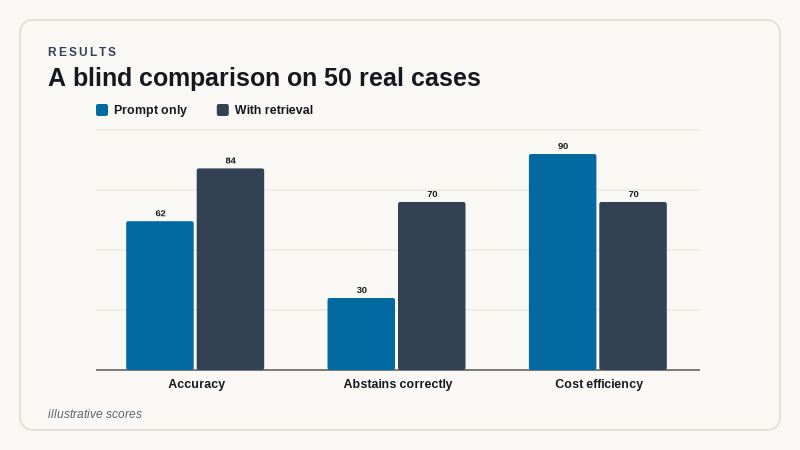
Testing GenAI Myths With Quick Experiments
Instead of debating claims about GenAI, run small experiments. Here is how to test five common assumptions.
Read →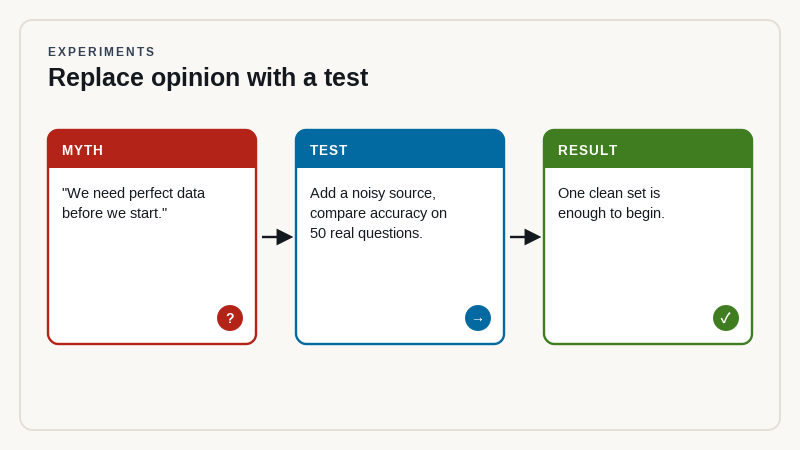
5 GenAI Myths Business Leaders Should Drop
Hype and fear both lead to poor decisions. Here are five common GenAI myths and what is closer to the truth.
Read →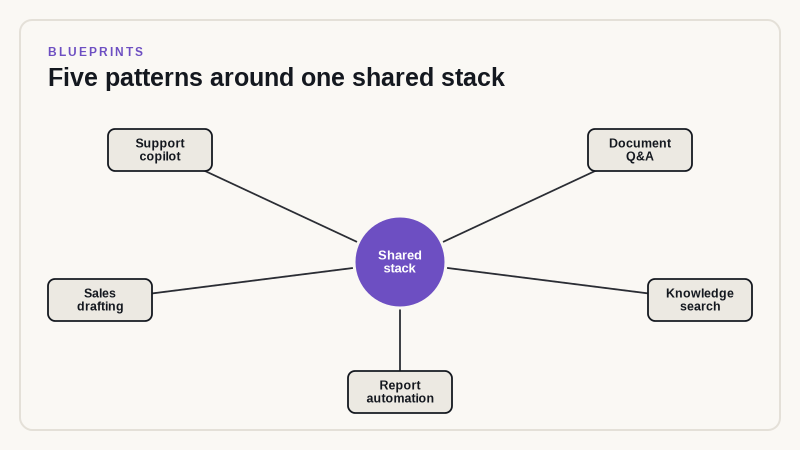
Five GenAI Patterns and Their Technical Blueprints
Reference blueprints for the five projects that ship fastest: support, document Q&A, drafting, search, and reporting.
Read →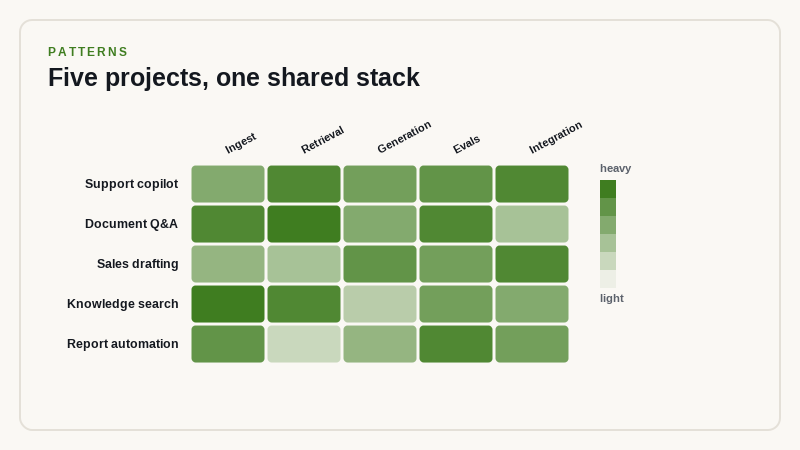
5 GenAI Projects Your Business Can Ship in 30 Days
You do not need a year-long AI program to see value. These five focused projects are small enough to launch in a month and useful enough to pay for themselves.
Read →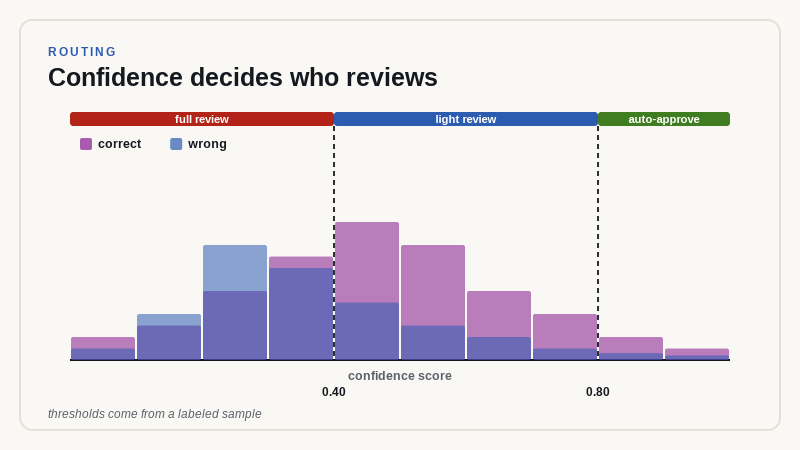
Designing Human-in-the-Loop Workflows for GenAI
Where to place review, how to route by risk and confidence, and how to turn corrections into improvements.
Read →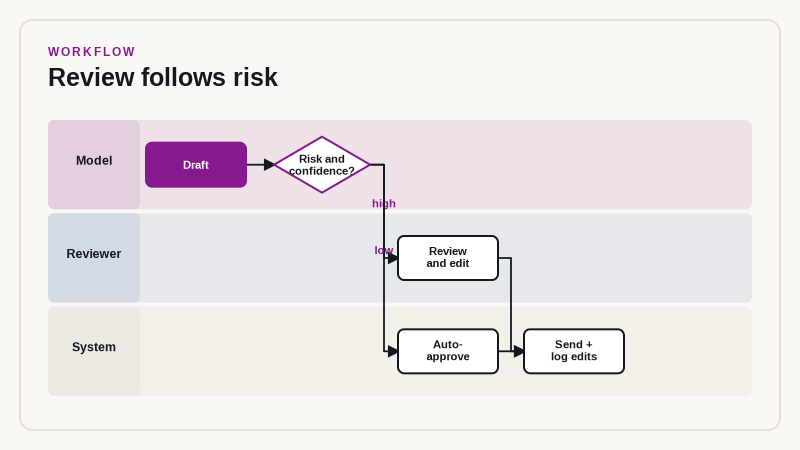
Why GenAI Works Best With a Human in the Loop
The best results come from AI and people working together, not from removing people.
Read →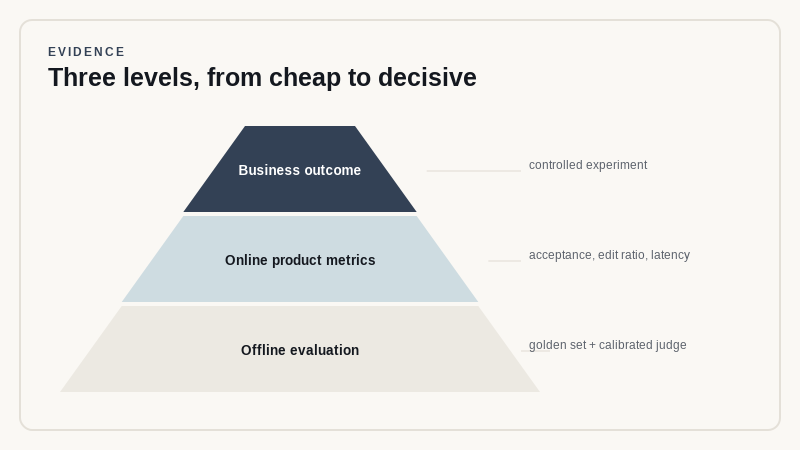
Measuring GenAI Quality: Offline Evals, Online Metrics, and A/B Tests
A measurement stack for GenAI: golden sets, model judges, production signals, and controlled rollouts.
Read →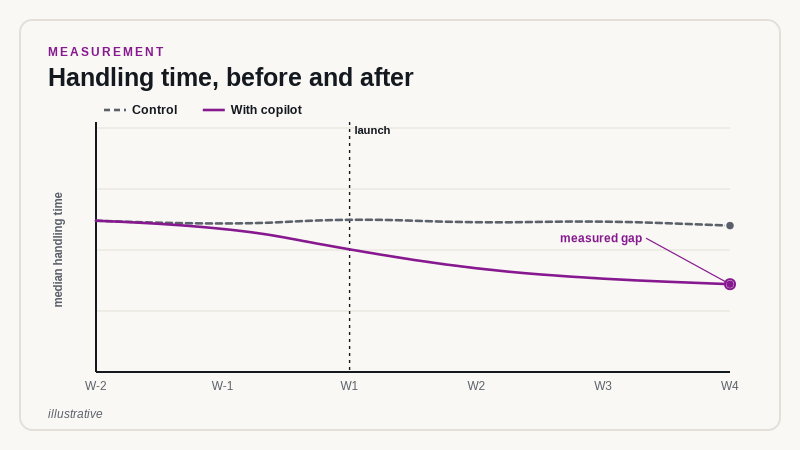
How to Measure Whether Your GenAI Project Is Working
If you cannot measure it, you cannot defend it. Pick your numbers before you build.
Read →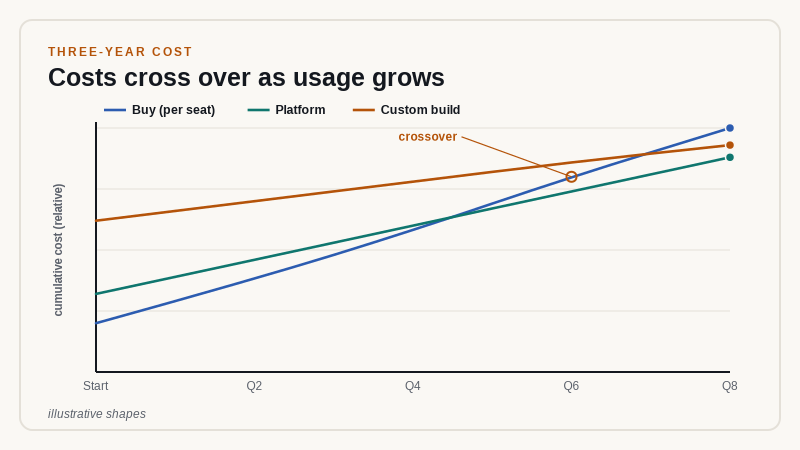
Build vs Buy for GenAI: An Engineering Decision Framework
How to decide between off-the-shelf tools, configurable platforms, and custom builds, including the hidden costs of each.
Read →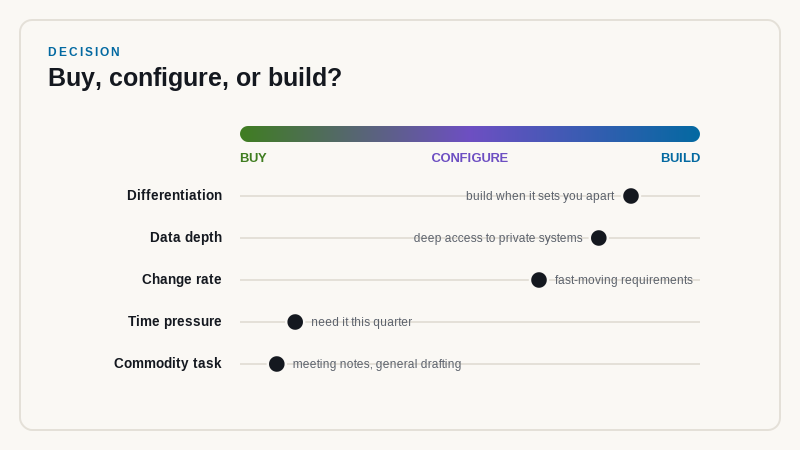
Build vs Buy: Custom GenAI or Off-the-Shelf Tools?
Ready-made AI tools are fast. Custom software fits exactly. Here is how to decide.
Read →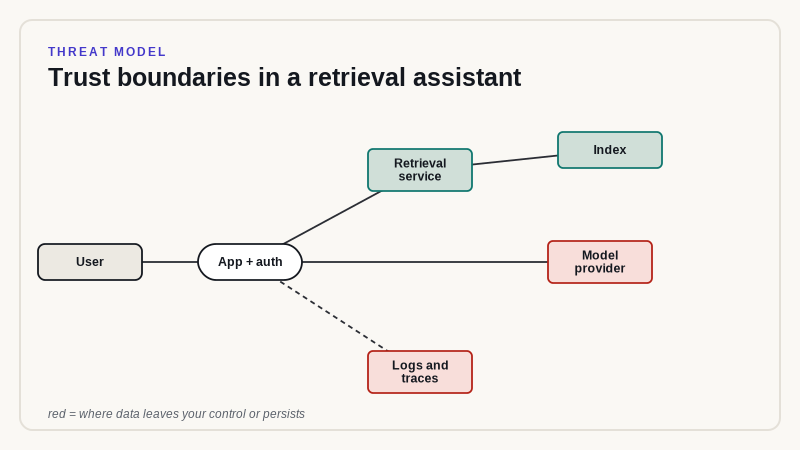
Secure GenAI Architecture: Protecting Data End to End
Threats, controls, and patterns for GenAI systems: redaction, access control, prompt injection, and audit.
Read →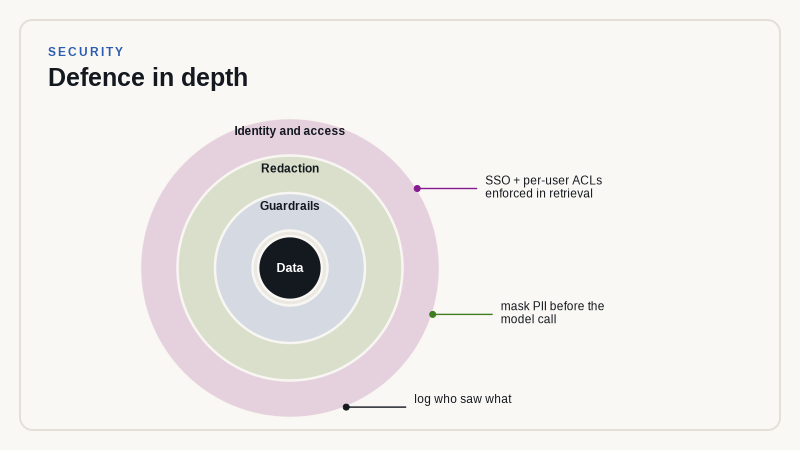
Keeping Your Data Safe When You Use GenAI
Security is the first question leaders ask. Here are the basics to get right.
Read →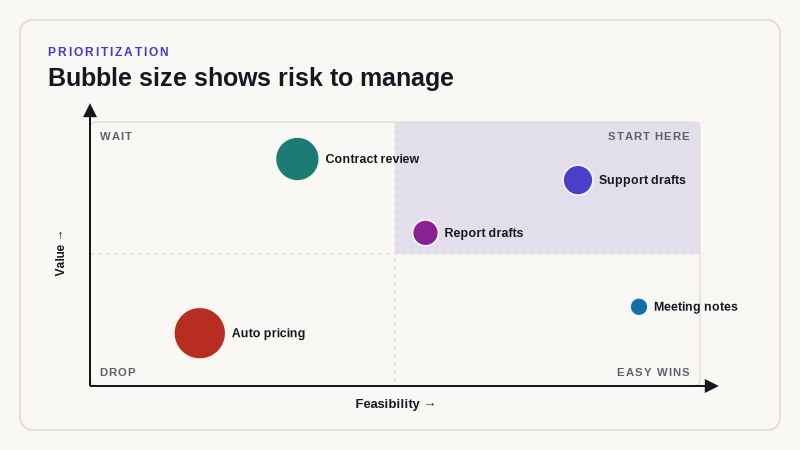
Scoring GenAI Use Cases With a Weighted Model
A transparent scoring method for choosing between candidate projects, with a small script you can reuse.
Read →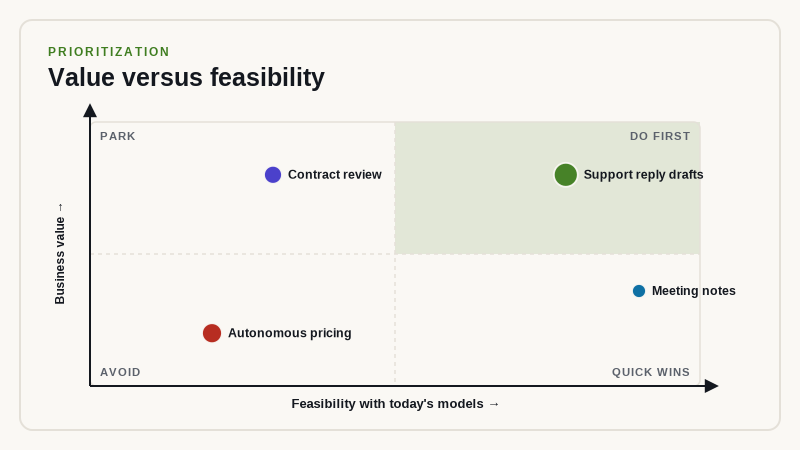
How to Pick Your First GenAI Use Case
Good first projects share four traits. Use this short checklist to choose yours.
Read →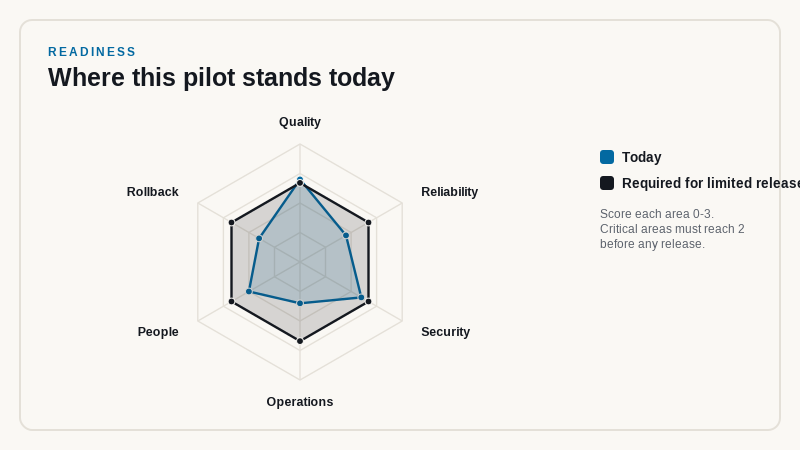
From Pilot to Production: A GenAI Readiness Checklist
The engineering gaps between a convincing demo and a system people rely on, with a checklist to close them.
Read →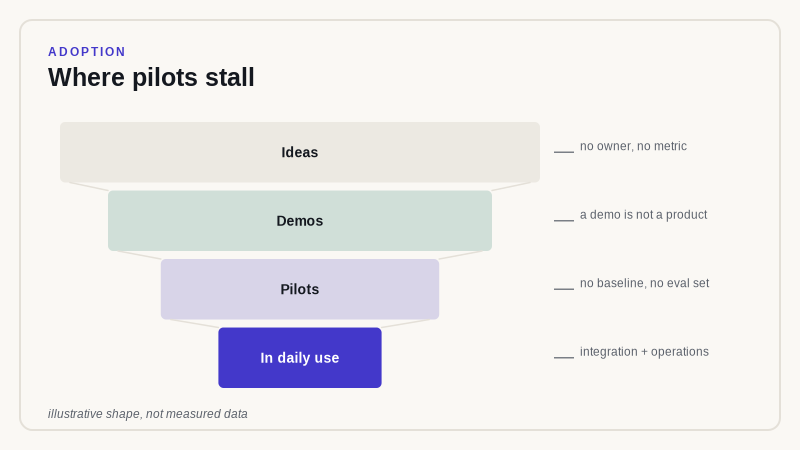
Why Most GenAI Pilots Stall, and How to Avoid It
A great demo is not a product. These are the common reasons pilots never reach real users.
Read →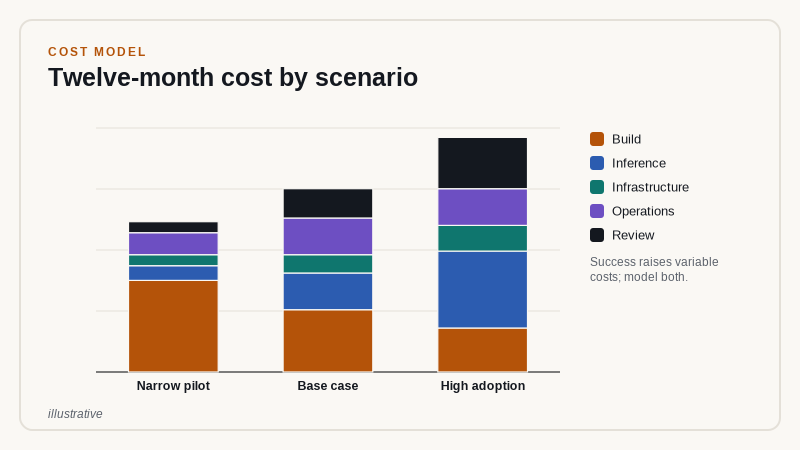
A Total Cost of Ownership Model for GenAI Systems
A worked cost model: build, run, and operate, with the levers that move each line.
Read →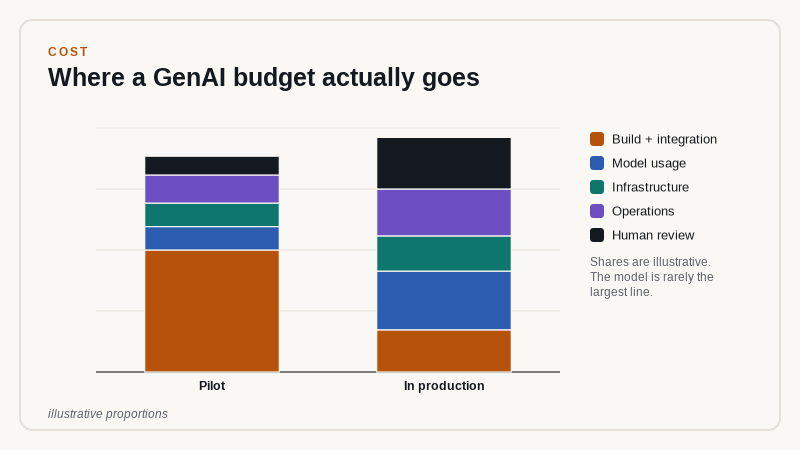
What a GenAI Pilot Really Costs
The model is rarely the biggest line item. Here is where GenAI pilot budgets really go.
Read →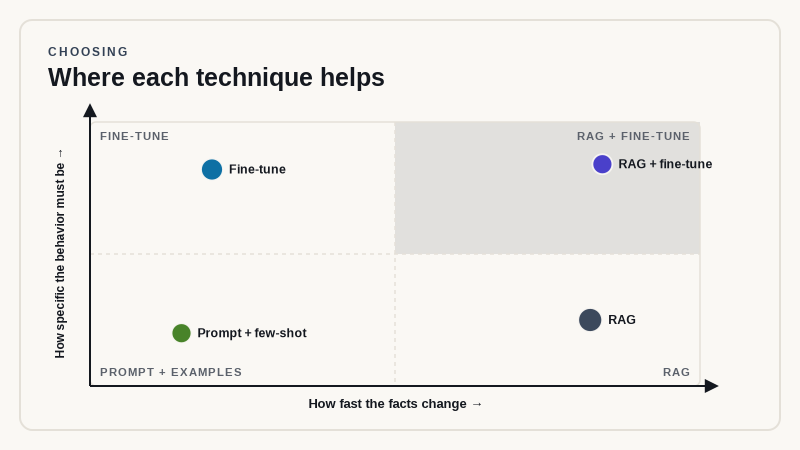
RAG vs Fine-Tuning: A Technical Decision Guide
When retrieval is enough, when fine-tuning pays off, and how to test the choice instead of arguing about it.
Read →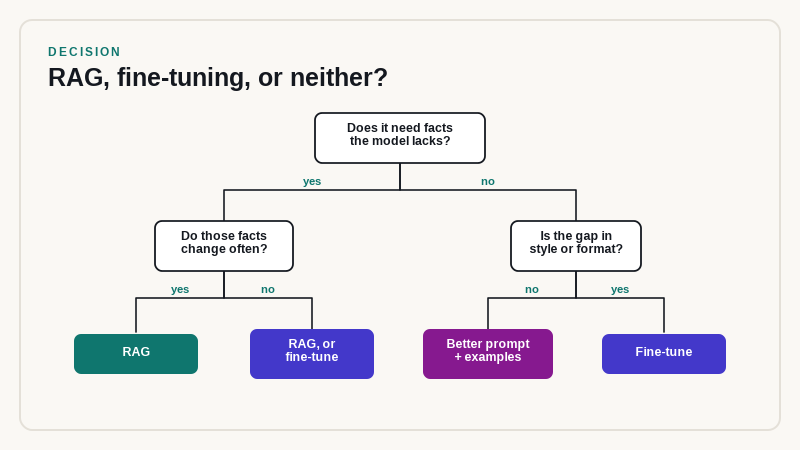
RAG vs Fine-Tuning: What Do You Actually Need?
Two terms come up in every GenAI conversation. Here is the difference and how to choose.
Read →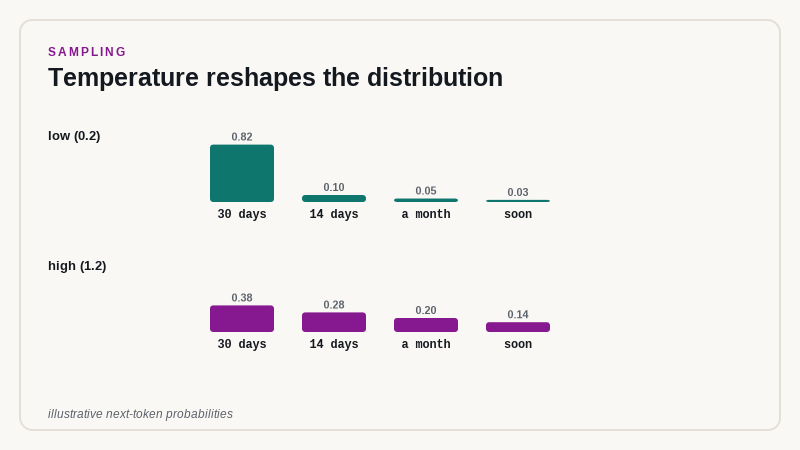
How LLMs Work for Practitioners: Tokens, Context, Sampling, and Cost
The mechanics that explain price, latency, and quirks, in the depth an engineering lead needs.
Read →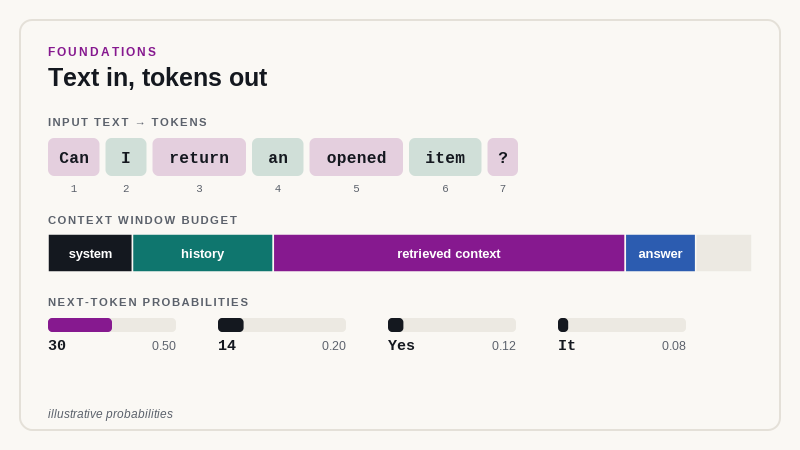
What Is Generative AI? A Plain-English Guide for Business Leaders
Generative AI writes, summarizes, and answers questions. Here is what it is, what it is good at, and where it needs care.
Read →
Our GenAI Delivery Framework: Eval-Driven Development in 30 Days
How we structure a month-long build around an evaluation set, so quality is measured from week one.
Read →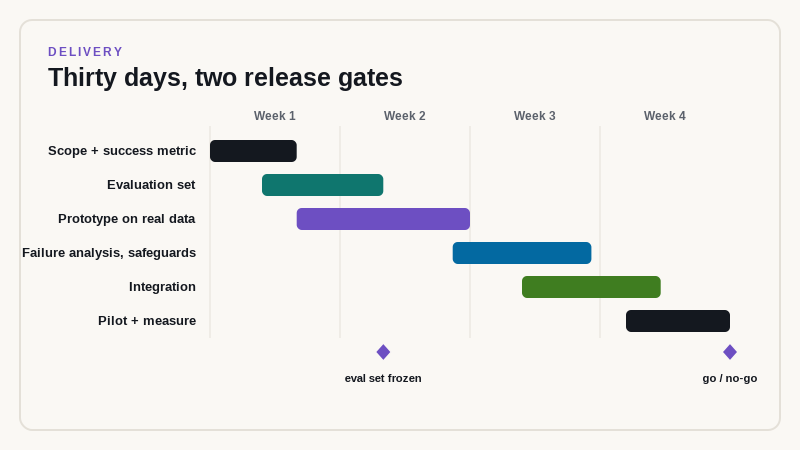
How We Run a GenAI Project, From Kickoff to Launch
What actually happens between saying yes and going live? A transparent look at how a GenAI project runs, week by week.
Read →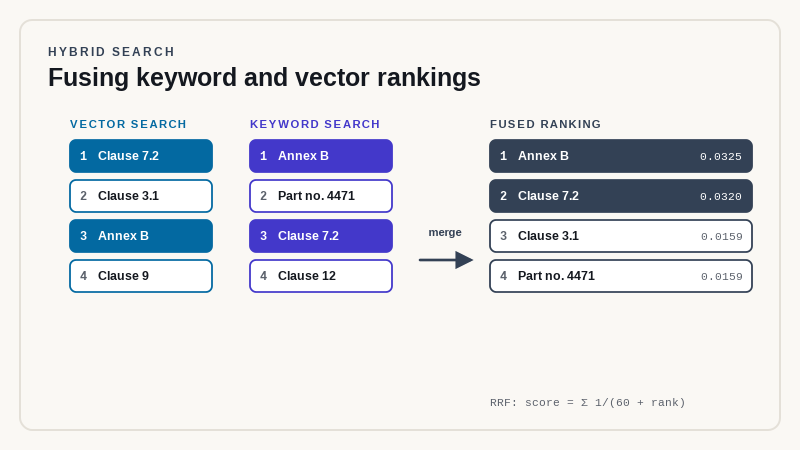
Production Document Q&A: Chunking, Hybrid Search, Citations, and Evals
The engineering choices that decide whether a document assistant is trusted: how you split, search, cite, and test.
Read →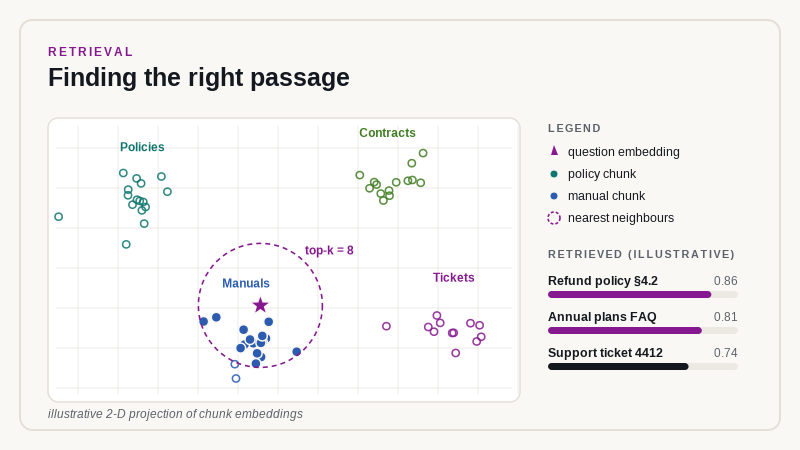
Document Q&A That Your Team Can Trust
Asking questions of your own documents is a top GenAI use case. The difference between a toy and a tool is trust. Here is how to earn it.
Read →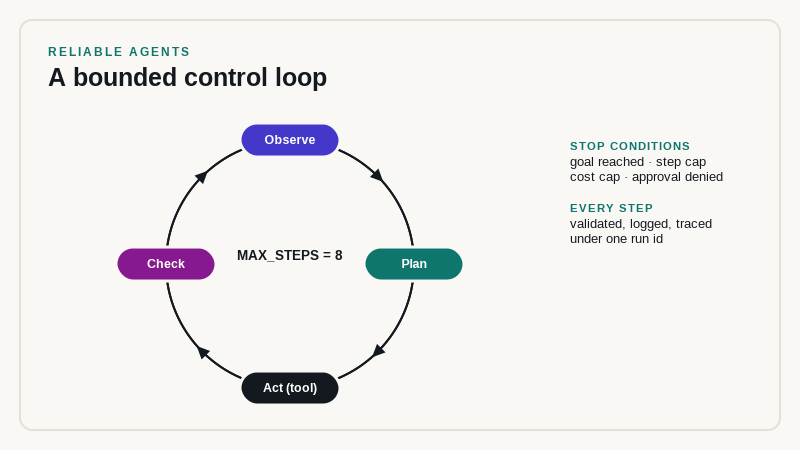
Designing Reliable AI Agents: Tool Use, Control Loops, and Failure Modes
An agent is a loop with tools and limits. Here is how to build one that behaves predictably in production.
Read →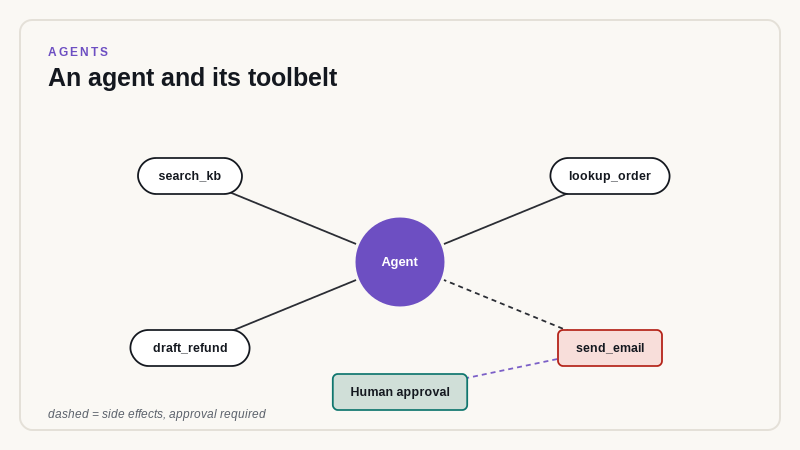
AI Agents Explained: When Automation Needs to Think
Agents are the next step beyond chatbots. Here is what they are, where they help, and where a simpler tool is the better choice.
Read →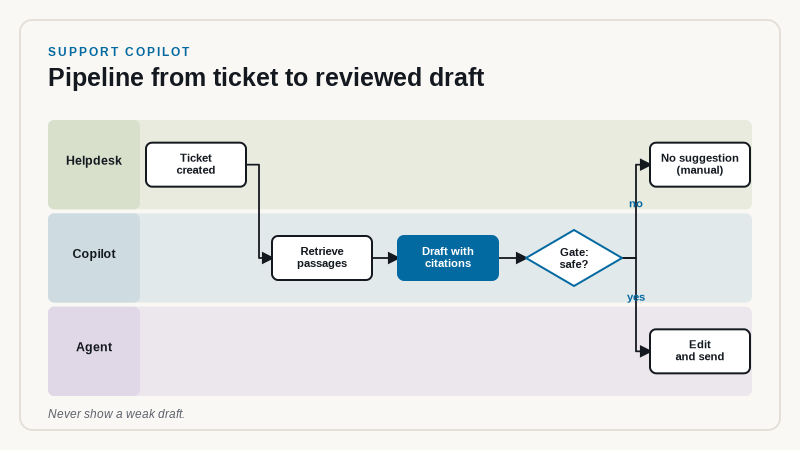
Engineering a Support Copilot: Retrieval, Drafting, and Review
A technical walk through ticket intake, hybrid retrieval, grounded drafting, confidence gating, and the feedback loop.
Read →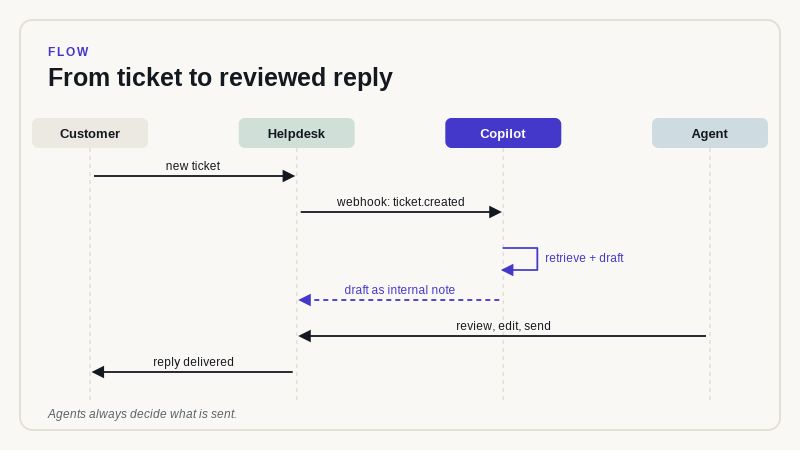
Building a Customer Support Copilot: What It Takes
A support copilot drafts replies from your help content so agents can respond faster and more consistently. Here is how one gets built.
Read →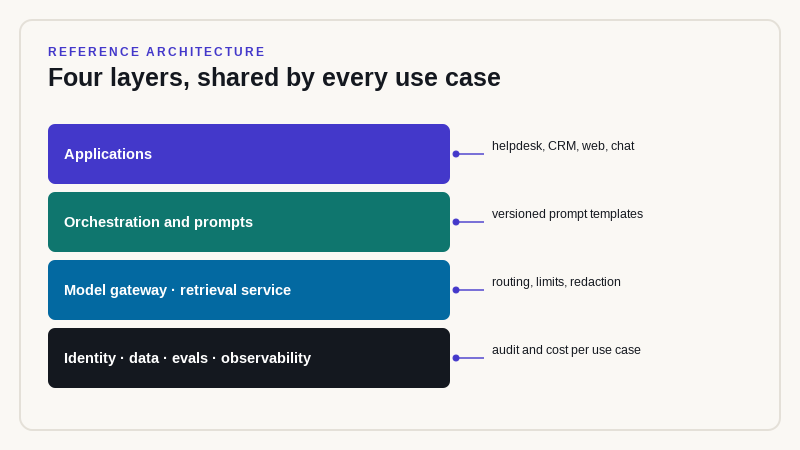
A GenAI Reference Architecture and Delivery Roadmap
The platform pieces you need before the second GenAI project, and the order to build them in.
Read →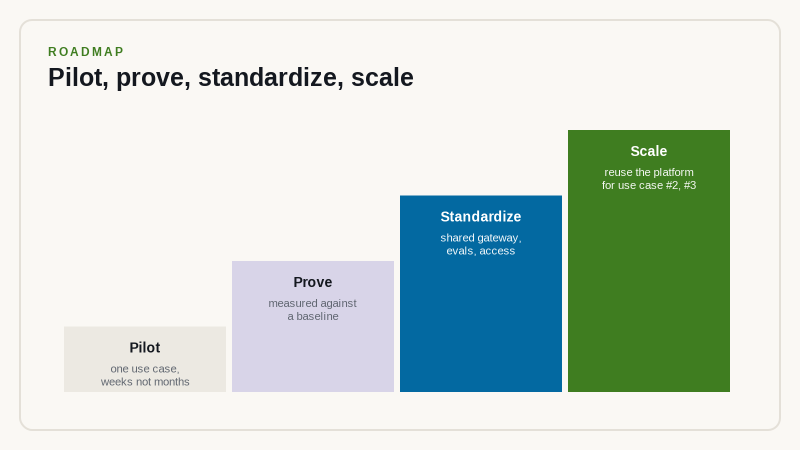
A Practical Roadmap for Adopting GenAI in Your Business
Most companies know they should be using GenAI. Few know where to start. This is a step-by-step path from first idea to company-wide use.
Read →