Deep Dive · Nov 3, 2026 · 7 min read
A Data Readiness Pipeline for GenAI: Ingestion, Quality, and Lineage
Turn scattered documents and tables into a reliable, permissioned, up-to-date source for GenAI.
 Short version← Getting Your Data Ready for AI: A Simple Checklist
The checklist in the short post becomes a pipeline in practice. Aim for a repeatable flow that keeps data fresh, deduplicated, permissioned, and traceable.
Stages
- Connect: read from drives, wikis, databases, and ticket systems using official APIs.
- Normalize: convert to clean text with structure preserved.
- Enrich: add metadata such as owner, date, type, and access groups.
- Deduplicate and version.
- Index for search, with the metadata used for filtering.
Incremental updates
Use content hashes to skip unchanged documents and to delete chunks for removed ones, so the index mirrors the source.
import hashlib

def sync(source_docs, store):
    seen = set()
    for doc in source_docs:
        h = hashlib.sha256(doc.text.encode()).hexdigest()
        seen.add(doc.id)
        if store.hash_of(doc.id) == h:
            continue                          # unchanged
        store.replace(doc.id, chunks=chunk(doc), content_hash=h, acl=doc.acl, updated=doc.modified)
    for stale_id in store.ids() - seen:
        store.delete(stale_id)                # removed at source
Quality checks
Fail the pipeline, or quarantine a document, when checks fail.
def quality_issues(doc):
    issues = []
    if len(doc.text.strip()) < 200:                     issues.append("too_short")
    if doc.text.count("\ufffd") > 5:                    issues.append("encoding_errors")
    if doc.modified < CUTOFF and not doc.marked_current: issues.append("possibly_stale")
    if not doc.acl:                                     issues.append("missing_access_rules")
    return issues
Lineage
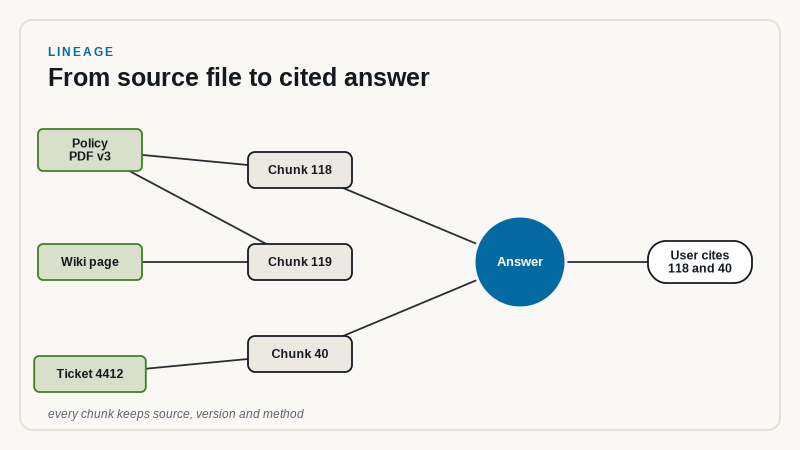
Store where each chunk came from: source system, document id, version, and extraction method. When an answer cites a chunk, you can trace it to the original and explain it.
Access control
Mirror source permissions into the index, refresh them regularly, and fail closed when permission data is missing.
Monitoring
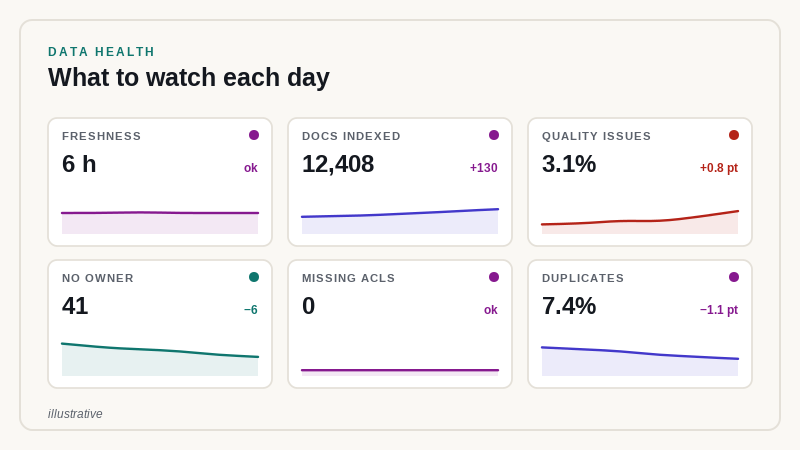
- Freshness: the age of the newest synced document per source.
- Volume: unexpected drops in documents or chunks.
- Quality issue counts by type.
Source-specific notes
- File shares and drives: watch for duplicates, personal copies, and outdated drafts; prefer designated authoritative folders.
- Wikis: keep page hierarchy and last-edited dates; skip stub pages.
- Ticketing systems: remove personal data, and distinguish internal notes from customer-visible text.
- Databases: model tables as documents carefully; usually query live data through tools instead of copying it into an index.
- Email and chat: high value, high privacy risk; limit to approved channels with clear retention rules.
Metadata that pays off
Good metadata is the difference between a clever demo and a reliable system. Capture owner, document type, department, effective date, version, language, and access groups. Use them to filter at query time and to explain results.
@dataclass
class DocMeta:
    doc_id: str
    source: str
    owner: str
    doc_type: str            # policy | contract | faq | ticket ...
    effective_date: date
    version: str
    language: str
    acl: list[str]           # groups allowed to read
    content_hash: str
Handling sensitive content
Scan for personal data and secrets during ingestion. Decide per category whether to exclude, redact, or index with restricted access. Document the decision, and test that excluded content never reaches the index.
Dashboards for data health
- Documents per source and their freshness.
- Share of documents failing quality checks, by reason.
- Chunks per document, to spot parsing problems.
- Documents without owners or access rules.
Ownership
Every source needs an owner who is accountable for its accuracy and who is told when it fails checks. Without owners, the pipeline reports problems that nobody fixes. Agree owners before ingesting the source, and include them in the pilot.
How we can help
We design and build the ingestion pipeline and run a data readiness assessment that tells you which sources are worth connecting first. Request an assessment.
Related reading
Need help implementing this?
Our consultants run architecture reviews and build production pilots. Book a free scoping call to talk through your design.
Book a Free Scoping Callor email us at hello@deepvero.com