Strategy · Jun 1, 2026 · 4 min read
A Practical Roadmap for Adopting GenAI in Your Business
Most companies know they should be using GenAI. Few know where to start. This is a step-by-step path from first idea to company-wide use.
 Technical deep diveA GenAI Reference Architecture and Delivery Roadmap →Architecture, code, and trade-offs for engineers and technical leads.
Every leadership team has the same question right now: where do we start with generative AI? The honest answer is smaller than most people expect. The companies that get lasting value do not launch a grand AI program. They pick one useful problem, prove it works, and grow from there.
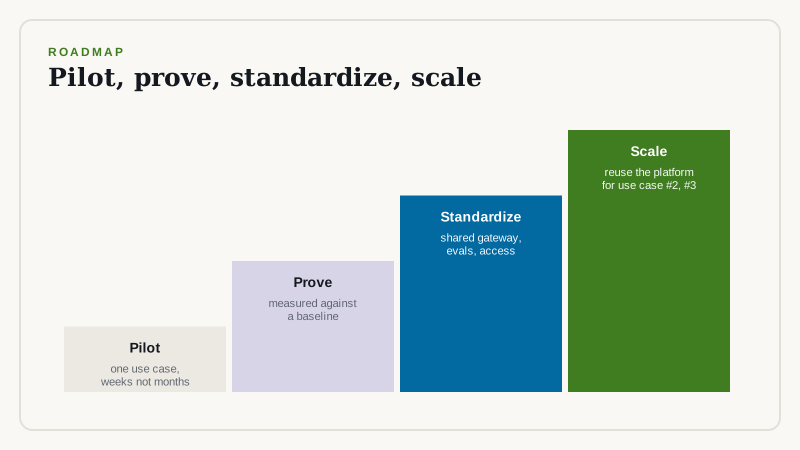
This roadmap breaks the journey into four stages you can follow in order.
Stage 1: Find the right first problem
Walk through your teams and ask where people spend time on repetitive reading, writing, searching, or summarizing. Those are the tasks GenAI handles well. Support replies, internal questions, report drafting, and document review are common starting points.
Score each candidate on three things: how much it hurts today, whether you already have the data it needs, and whether you can measure the improvement. Choose the highest score, not the most exciting idea.
Stage 2: Run a focused pilot
Give the pilot a clear scope and a short timeline, around 30 days is a good target. Build it on your real data, with a small group of real users. Agree before you start on the one number that will tell you whether it worked, such as minutes saved per task or tickets handled per person.
Stage 3: Prove the value and fix the gaps
Compare results to your baseline. Ask users what still frustrates them. Look at where the AI gets things wrong and add safeguards: better source material, review steps, or limits on what it is allowed to do. This stage is where trust is earned.
- Share results with the wider team, including the weak spots.
- Decide what stays human-reviewed and what can be automated.
- Document what you learned so the next project is faster.
Stage 4: Scale carefully
Once one project has proven itself, extend it to more users or take the same approach to a second use case. Reuse what you built: the data connections, the review process, and the security rules. Each project should be easier than the last.
Common mistakes to avoid
- Starting with a company-wide platform instead of a single problem.
- Skipping the baseline, so you cannot show improvement.
- Treating the demo as the finish line.
- Leaving security and data questions until the end.
A good roadmap is boring on purpose. Small, measured steps beat ambitious plans that never ship. If you would like help choosing your first project and scoping it, we are happy to talk it through.
Related reading
Want GenAI working in your business?
Book a free GenAI scoping call and we will help you pick the right first project.
Book a Free Scoping Callor email us at hello@deepvero.com